So, you’re running a food business—a bustling restaurant, a boutique butcher shop, or a booming meal prep service—and you’re constantly battling the clock against food spoilage. You’ve heard the whispers, seen the pros do it, and now you’re ready to take the plunge and buy a commercial vacuum sealer. Smart move. This isn’t just about bagging up leftovers; it’s about revolutionizing your workflow, slashing waste, and locking in that peak-freshness flavor that keeps customers coming back. But where do you even start? The market is flooded with options, and the last thing you need is a glorified kitchen gadget that can’t handle the heat. I’ve spent years in professional kitchens and have seen firsthand how the right equipment can make or break an operation. A commercial vacuum sealer is one of those non-negotiable workhorses. Forget those flimsy countertop models you see on infomercials. We’re talking about heavy-duty, built-to-last machines that will become the unsung hero of your back-of-house. This guide is your new best friend—we’ll break down everything you need to know, from the nitty-gritty science to the practical features that matter most for your business. Let’s get you set up for success.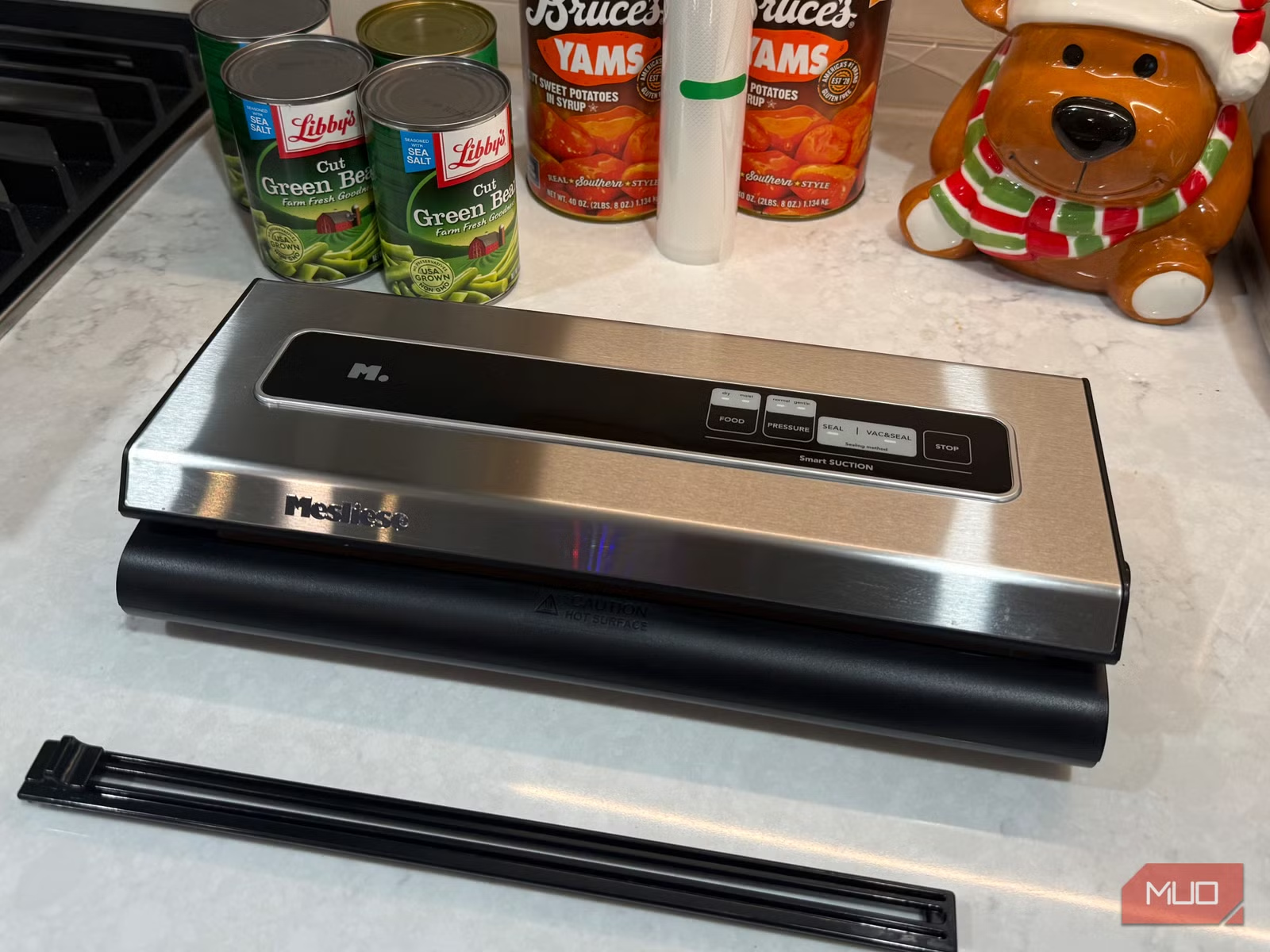
Why a Commercial Sealer is a Game-Changer for Your Business
First things first, what’s happening inside that bag? A vacuum sealer works by sucking nearly all the oxygen out of a specially designed bag or container before creating an airtight seal. Oxygen is the primary culprit behind food spoilage—it fuels the growth of mold, yeast, and aerobic bacteria. By removing it, you’re essentially hitting the pause button on decay.But for a commercial setting, the benefits go way beyond just a longer shelf life.
- Drastically Reduce Food Waste: This is the big one. By extending the life of your raw ingredients—from prime cuts of meat to delicate produce—by up to five times, you’re throwing less money in the bin. Think about the cost of that case of avocados or that beautiful side of salmon. A sealer pays for itself in savings.
- Unlock Bulk Buying Power: See a great deal on seasonal produce or a bulk discount from your meat supplier? Now you can confidently stock up, portion everything out, vacuum seal it, and store it for weeks or months without a drop in quality.
- Streamline Your Prep (Mise en Place): You can prep ingredients during slower periods, seal them in perfect portions, and have them ready to go for the dinner rush. This is a lifesaver for consistency and speed. It’s the secret behind many top-tier restaurants’ flawless execution.
- Master Sous Vide Cooking: If you’re exploring the world of sous vide, a commercial vacuum sealer is essential. It ensures a perfect, water-tight seal and maximum heat transfer for incredibly tender and evenly cooked results.
- Rapid Infusions and Marinades: Need to marinate a steak in minutes, not hours? The vacuum process opens up the pores of the meat, allowing marinades to penetrate deeply and quickly. The same goes for pickling vegetables or infusing oils.
Chamber vs. External: What’s the Right Fit for You?
When you decide to buy a commercial vacuum sealer, you’ll face one primary choice: a chamber sealer or an external (or “clamp”) sealer. They both remove air, but they do it in fundamentally different ways, and choosing the right one is crucial for your operation.The main difference is that chamber sealers place the entire bag inside a chamber, equalizing the pressure to seal liquids without sucking them out, making them ideal for high-volume and liquid-rich foods. External sealers, on the other hand, clamp onto the outside of the bag and suck the air out, which is simpler but less effective for liquids. For explore our vacuum sealers reviews on this site.
Chamber Vacuum Sealers: The Heavy-Duty Workhorse
Think of a chamber sealer as the industrial-strength option. You place the entire bag inside the machine’s chamber, close the lid, and the machine removes the air from the entire chamber, not just the bag. This means the air pressure inside and outside the bag remains equal, so liquids stay put.
- Best for: High-volume restaurants, butchers, caterers, and any business that needs to seal soups, stews, marinades, or other liquids.
- Pros:
- Can seal liquids flawlessly.
- Achieves a stronger, more consistent vacuum.
- Faster cycle times for back-to-back sealing.
- Bags are generally cheaper as they don’t need a textured channel.
- Cons:
- Larger and heavier, requiring dedicated counter space.
- Higher upfront investment.
External Clamp Sealers: Versatility and Space-Saving
This is the style most people are familiar with from home use, but commercial versions are far more powerful and durable. You place the open end of the bag onto a sealing bar and close a lid that clamps it down. The machine then sucks the air directly out of the bag and heat-seals it.
- Best for: Smaller cafes, delis, food trucks, or businesses with lower volume needs or limited space.
- Pros:
- More compact and often portable.
- Lower initial cost.
- Can seal very long or oddly shaped bags, as you’re not limited by a chamber size.
- Cons:
- Struggles with liquids (it will try to suck the liquid out with the air).
- Requires more expensive, specially textured bags to create air channels.
- Generally not as fast or powerful as a chamber sealer.
| Feature | Chamber Vacuum Sealer | External Clamp Sealer |
|---|---|---|
| Liquid Sealing | Excellent | Poor (requires pre-freezing) |
| Best For | High volume, liquids, sous vide | Low volume, dry goods, space-conscious |
| Upfront Cost | High | Low to Medium |
| Bag Cost | Low | High (requires textured bags) |
| Footprint | Large, Heavy | Small, Lighter |
| Vacuum Strength | Superior (up to 99.9% air removal) | Good (up to 99% air removal) |
How to Use Your Commercial Vacuum Sealer Like a Pro
Regardless of the type you choose, the basic process is straightforward. Here’s a general step-by-step to get you started.
- Preparation is Key: Make sure your food is ready. For liquids or very moist foods being used in an external sealer, pre-freeze them for an hour or two until firm. For produce like broccoli or cabbage, it’s best to blanch them first to stop enzyme activity.
- Choose the Right Bag: Use a bag that gives you at least a couple of inches of extra space at the top (headspace). This ensures you get a clean, strong seal.
- Fill the Bag: Place your food item neatly inside. If you’re sealing anything sharp, like bones, you might want to wrap the sharp edges in a bit of parchment paper or use a specialized bone guard to prevent punctures.
- Position the Bag:
- For External Sealers: Lay the open end of the bag flat across the seal bar, making sure it’s clean and free of wrinkles or food debris.
- For Chamber Sealers: Place the bag inside the chamber with the open end draped over the seal bar.
- Start the Cycle: Close the lid and start the machine. It will automatically run through the vacuum and seal cycle. Most commercial units allow you to adjust the vacuum level and seal time for different types of food.
- Inspect the Seal: Once the cycle is complete, remove the bag and check the seal. It should be clear, flat, and uniform. If it looks milky, incomplete, or wrinkled, you may need to reseal it or adjust your settings.
Pro Tips to Maximize Your Sealing Success
I’ve seen a lot of rookie mistakes over the years. Here are a few tips to help you avoid them and get the most out of your machine.
- Double Seal for Security: For long-term freezer storage or sous vide cooking, run a second seal cycle about a quarter-inch away from the first one. It’s a simple trick that provides extra insurance against leaks.
- Keep it Clean: Wipe down the seal bar and gaskets regularly. Any food residue can compromise the quality of the seal.
- Don’t Overfill: It’s tempting to cram as much as possible into a bag, but this is a common cause of seal failure. Leave adequate headspace!
- Pulse Mode is Your Friend: If your sealer has a “pulse” function, use it for delicate items like bread, chips, or soft-baked goods. It gives you manual control over the vacuum process so you don’t crush them.
|
Our Picks for the Best Food Vacuum Cealer in 2026
As an Amazon Associate, we earn from qualifying purchases.
|
||
| Num | Product | Action |
|---|---|---|
| 1 | FoodSaver Compact Vacuum Sealer Machine with Airtight Bags and Roll - Ideal for Sous Vide and Airtight Food Storage, White |

|
| 2 | Vakumar Liquid Vacuum Sealer Machine, 90Kpa Vacuum Sealer Machine Preservation Dry/Moist/Liquid Modes, LED Indicator Light, Handle Locked Design, Built-in Cutter and Bag Storage, Removable Drip Tray |
|
| 3 | FoodSaver Vacuum Sealer Machine, Automatic Bag Detection, Sous Vide Friendly, with sealer bags, roll, handheld vacuum sealer, black |
|
| 4 | Anova Culinary Precision Vacuum Sealer Pro, Includes Large Bag Roll (19ft), Wet & Dry Dual Food Vacuum Sealer Machine for Sous Vide and Long-Term Storage, 2-Year Warranty |
|
| 5 | SEATAO VH5188 Automatic Vacuum Sealer Machine, 90kPa Multifunction Commercial Vacuum Food Sealer For Food Preservation, Dry & Moist & Food & Extended Modes, LED lights, Double Seal |
|
| 6 | FoodSaver V4400 2-in-1 Vacuum Sealer Machine with Automatic Vacuum Sealer Bag Detection and Starter Kit |
|
| 7 | Chef Preserve Compact Vacuum Sealer for Food (Vacuum Sealer Machine + 30 Reusable Vacuum Bags) Powerful Handheld Vacuum Sealer Machine, Seal Meal Saver, Portable Food Sealer |
|
| 8 | Nesco Deluxe Food VS-12 Vacuum Sealer, 130 Watts, Kit Bags & Viewing Lid, Compact, Silver |
|
| 9 | NutriChef Automatic Vacuum Air Sealing System for Food Preservation with Starter Kit, Compact Design, Lab Tested, Dry & Moist Food Modes with Led Indicator Lights, Black |
|
| 10 | Vacuum Sealer Machine Powerful 90Kpa Precision 6-in-1 Compact Food Preservation System with Cutter, 2 Bag Rolls & 5 Pre-cut Bags, Widened 12mm Sealing Strip, Dry&Moist Modes (Silver) |
|
The Do’s and Don’ts: What Should You Vacuum Seal?
While a vacuum sealer is incredibly versatile, not all foods are created equal. Sealing the wrong thing can lead to poor results or even potential food safety issues.
Foods You SHOULD Vacuum Seal:
- Meats and Poultry: Beef, pork, chicken, and fish are perfect candidates. It prevents freezer burn and locks in juices.
- Hard Cheeses: Vacuum sealing prevents mold growth on hard cheeses like cheddar or parmesan, extending their life significantly.
- Dry Goods: Coffee beans, nuts, pasta, and flour are protected from moisture and staleness.
- Prepped Vegetables: Carrots, celery, peppers, and blanched green beans are great for sealing.
- Soups and Stocks: A chamber sealer’s best friend! Portion out stocks and sauces for easy use later.
Foods You SHOULDN’T Vacuum Seal (or need to prep first):
- Cruciferous Vegetables: Raw broccoli, cauliflower, cabbage, and Brussels sprouts release gases as they ripen. If sealed raw, the bag will expand and the veggies will spoil. Always blanch them first!
- Soft Cheeses: Delicate cheeses like brie, camembert, and ricotta do not hold up well to vacuum pressure and can harbor anaerobic bacteria.
- Whole Mushrooms: Similar to cruciferous veggies, raw mushrooms can ripen and spoil quickly in an oxygen-free environment. It’s better to cook them first.
- Fresh Garlic and Onions: These produce natural gases and present a risk for the growth of botulism bacteria in an oxygen-free environment. It is much safer to seal them cooked or frozen.
As our friend and culinary expert, Chef Isabelle Dubois, often says, “A commercial vacuum sealer doesn’t just preserve food; it preserves your time, your money, and your reputation. Treat it as an investment in quality, and it will pay you back tenfold.”
How to Buy a Commercial Vacuum Sealer That Won’t Let You Down
Ready to make your choice? Here’s a final checklist of features to consider when you’re ready to buy a commercial vacuum sealer.
- Pump Type: The heart of the machine. Oil pumps (common in chamber sealers) are quieter, more durable, and can run continuously, but require occasional oil changes. Dry or “maintenance-free” pumps are lighter and require less upkeep but can be louder and may need cooldown periods.
- Seal Bar Length: This determines the maximum width of the bag you can use. A 12-inch bar is a good all-around size, but larger operations might need a 15-inch or 16-inch bar, or even a machine with double seal bars to seal two bags at once.
- Build Quality: Look for stainless steel construction. It’s durable, easy to clean, and will withstand the rigors of a commercial kitchen.
- Cycle Time: How quickly can the machine complete a full vacuum and seal cycle? For a high-volume business, a few seconds per cycle can add up to significant time savings over a day.
- Certifications: Ensure the machine is NSF certified or has similar food-safe certifications, which are often required by health departments.
- Budget and Warranty: Commercial units are an investment, with prices ranging from several hundred to several thousand dollars. Balance your budget with your needs and always look for a solid manufacturer’s warranty.
Frequently Asked Questions
What’s the main difference between a commercial and a home vacuum sealer?The biggest differences are durability, power, and duty cycle. Commercial sealers are built with more robust components, like powerful pumps and heavy-duty seal bars, designed to run for hours on end. Home models are meant for occasional use and will overheat if used continuously.Can you really seal liquids in a vacuum sealer?Yes, but only effectively in a chamber vacuum sealer. The pressure equalization in a chamber prevents the liquid from being sucked out of the bag. With an external sealer, you must freeze the liquid solid first.How much maintenance does a commercial sealer require?It depends on the pump. Dry pumps are virtually maintenance-free. Oil pumps, while more powerful, require a simple oil change every 6-12 months, depending on usage, to keep them running smoothly.Are the special vacuum sealer bags reusable?Technically, yes, if you leave enough extra space to cut off the old seal and create a new one. However, for commercial food safety and sanitation, especially with raw meats, it is almost always recommended to use a new bag every time.Is a commercial vacuum sealer worth the investment for a small business?Absolutely. While the upfront cost is higher, the savings from reduced food waste, the ability to buy in bulk, and the immense improvement in workflow efficiency mean that most businesses find the machine pays for itself very quickly.
Your Next Step to a Smarter Kitchen
Choosing to buy a commercial vacuum sealer is more than just a purchase; it’s a strategic decision to make your business more efficient, less wasteful, and more profitable. By understanding the core differences between models and zeroing in on the features that will best serve your unique needs, you can invest in a piece of equipment that will work as hard as you do. So take this knowledge, assess your kitchen’s workflow, and get ready to unlock a new level of freshness and control. Your bottom line—and your customers—will thank you.
Frequently Asked Questions
What is the main difference between a commercial and a home vacuum sealer?
Commercial vacuum sealers are built with more robust components, such as powerful pumps and heavy-duty seal bars, designed for continuous operation for hours. In contrast, home models are intended for occasional use and can overheat if used continuously.
Can liquids be effectively sealed using a commercial vacuum sealer?
Yes, liquids can be sealed effectively, but only with a chamber vacuum sealer. The pressure equalization within the chamber prevents the liquid from being drawn out of the bag. For external sealers, liquids must be pre-frozen solid before sealing.
How much maintenance is typically required for a commercial vacuum sealer?
Maintenance depends on the pump type. Dry pumps are virtually maintenance-free. Oil pumps, which are more powerful, require a simple oil change every 6-12 months, depending on usage, to ensure smooth operation.
Are vacuum sealer bags designed for commercial use reusable?
Technically, bags can be reused if sufficient extra space is left to cut off the old seal and create a new one. However, for commercial food safety and sanitation, especially with raw meats, it is almost always recommended to use a new bag every time.
Is a commercial vacuum sealer a worthwhile investment for a small business?
Absolutely. While the upfront cost is higher, the savings from reduced food waste, the ability to buy in bulk, and significant improvements in workflow efficiency mean most businesses find the machine pays for itself quickly, often within months.
How to Use Your Commercial Vacuum Sealer Like a Pro
Follow these steps to effectively use your commercial vacuum sealer for optimal food preservation and efficiency in your business.
Ensure your food is ready for sealing. For liquids or very moist foods with an external sealer, pre-freeze them for 1-2 hours until firm. Blanch produce like broccoli or cabbage first to halt enzyme activity.
Choose a vacuum bag that provides at least two inches of extra space at the top (headspace). This ensures a clean, strong, and reliable seal.
Place your food neatly inside the bag. For external sealers, lay the open end flat across the seal bar, free of debris. For chamber sealers, place the bag inside the chamber with the open end draped over the seal bar.
Close the lid and activate the machine. It will automatically complete the vacuum and seal cycle. Most commercial units allow adjustments to vacuum level and seal time for different food types.
After the cycle, remove the bag and check the seal. It should appear clear, flat, and uniform. If the seal looks milky, incomplete, or wrinkled, you may need to reseal or adjust your machine's settings.
Get our weekly buyer guide
Practical specs, not advice. Unsubscribe anytime.
This commercial vacuum sealer has transformed how we manage inventory at our restaurant. We used to throw out so much produce and prepped ingredients, but now everything stays fresh for so much longer. The vacuum seal is incredibly strong, and it’s built to withstand constant use in a busy kitchen. It’s definitely not a flimsy countertop model, and that durability is exactly what we needed.
I finally took the plunge and bought a chamber vacuum sealer for my small catering business, and it’s been a game-changer. The ability to seal liquids without making a mess is incredible, especially for my sous vide preparations. It’s definitely a bigger investment than those external models, but the efficiency and reduced food waste have already started paying for themselves. Highly recommend for any serious food prep operation.
I was really excited to get a commercial vacuum sealer for my meal prep service, hoping to cut down on spoilage. While it does a good job with most dry goods and pre-cooked proteins, I’ve found that the bags recommended for it are a bit pricey. It adds up quickly when you’re sealing hundreds of portions a week. The machine itself is robust, but the ongoing cost of supplies is something to consider.
We upgraded from a basic FoodSaver to a commercial external vacuum sealer for our butcher shop, and the difference in sealing power is night and day. It handles the continuous use much better, and the wider seal strip is great for larger cuts of meat. My only minor complaint is that it can still struggle a bit with very moist items, even with the moist setting. Still, a solid workhorse for the price.